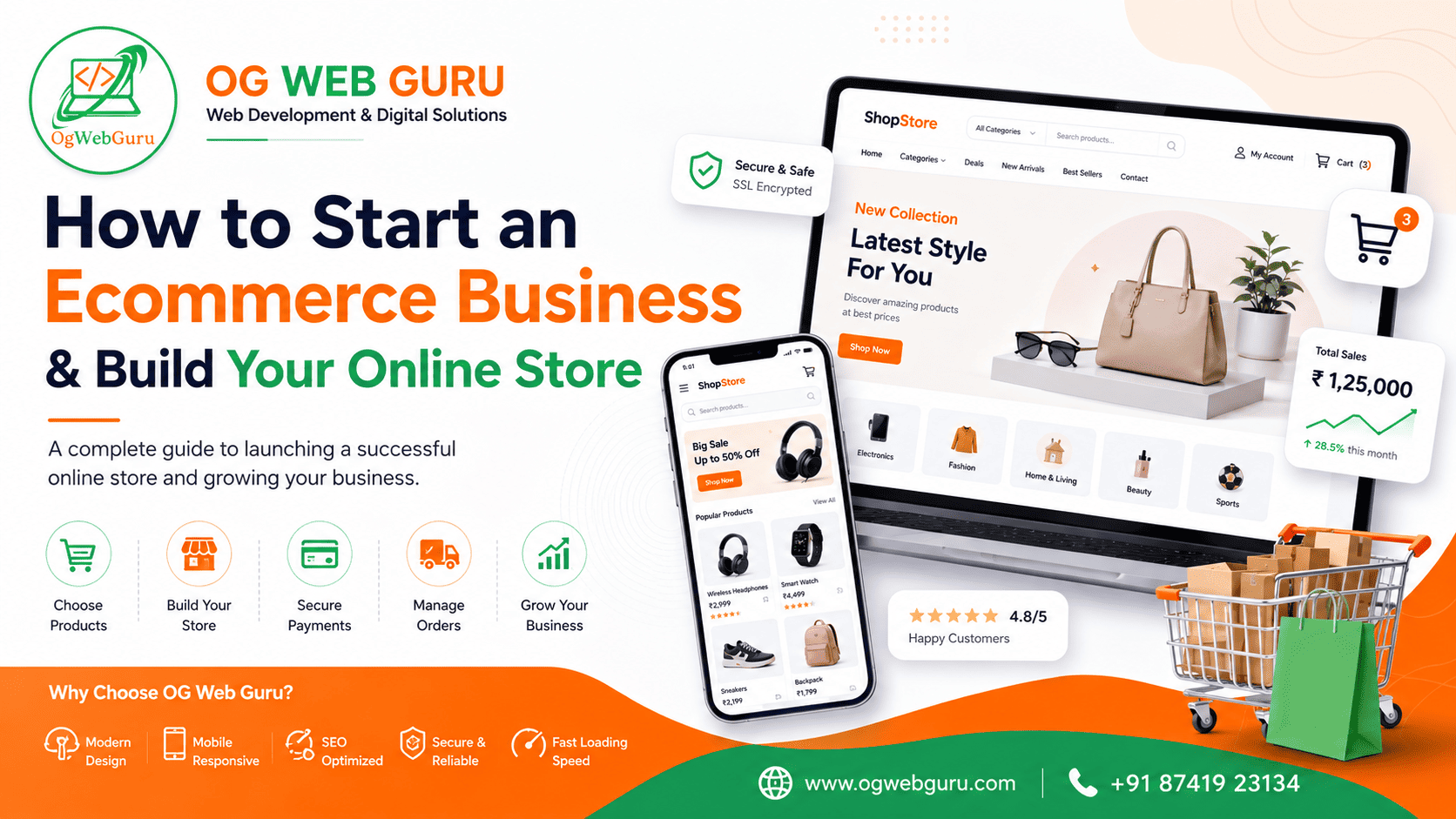
How to Start an Ecommerce Business in 2026 (Full Guide)
So you've got a product idea — maybe it's been sitting in your head for months, or maybe you've already been selling through Instagram DMs and WhatsApp. Either way, you're ready to build a proper online store and turn this into a real business.
The good news: starting an ecommerce business in 2026 is far more accessible than it was five years ago. The infrastructure exists, the payment systems work, and customers are more comfortable buying online than ever.
This guide covers everything — from choosing what to sell, to picking the right platform, to launching your store and getting your first orders. No fluff. Just the actual steps.
What Does "Starting an Ecommerce Business" Actually Mean?
Ecommerce — short for electronic commerce — is simply selling products or services through a website. But building a successful ecommerce business involves more than slapping products on a page.
It means having a store that loads fast, looks trustworthy, ranks on Google, accepts payments smoothly, and gives customers a reason to come back. That's the difference between a hobby store and a business.
India's ecommerce market crossed $70 billion in 2023 and is projected to hit $150 billion by 2027. There's genuine money being made by small brands who build the right foundation early.
Step-by-Step: How to Start Your Ecommerce Business
Decide What You're Selling
This sounds obvious, but it's where most people rush past. Your product choice determines your margins, your logistics, your audience, and your marketing. Spend real time here.
Clothing, skincare, food, accessories, home goods
Templates, courses, ebooks, presets, software
Sell without holding inventory — supplier ships directly
Art, jewellery, personalised gifts, craft items
Validate Your Idea Before Building
Before spending a single rupee on a website, test demand. Post about your product on Instagram or a Facebook group. Run a small paid ad to a simple form. Sell 10 units manually before automating anything.
If people are interested, you have something worth building around. If not, pivot before you've sunk a budget into it.
Sort Your Business Basics
You don't need a full legal setup on day one, but you do need a few things before you can accept payments:
- A business name (and a domain that matches or is close)
- A bank account for the business (or a separate account at minimum)
- GST registration if your annual revenue exceeds ₹20 lakhs (₹10 lakhs for some states)
- A payment gateway account — Razorpay, Cashfree, or PayU are popular choices in India
Choose How to Build Your Online Store
This is the big decision. Here's an honest breakdown of your options:
| Option | Cost | Best For | Limitation |
|---|---|---|---|
| Shopify | ₹1,500–₹6,000/mo | Quick launch, simple products | Monthly fees forever, limited customization |
| WooCommerce | ₹5,000–₹25,000 setup | WordPress users, content + store | Needs maintenance, can get slow |
| Custom Built | One-time ₹25,000 | Full control, unique brand, scalable | Needs a good developer — worth it |
| Meesho / Amazon | Free to list | Volume sellers, commodity products | No brand ownership, heavy competition |
💡 The smarter move for serious brands: A custom-built ecommerce website gives you full ownership, zero recurring platform fees, and a store that's built around your brand — not a generic template. OG Web Guru builds complete ecommerce stores for a one-time cost of just ₹25,000, with annual maintenance at just ₹5,000/year. No monthly subscriptions eating your margins.
Set Up Your Store Pages
Every ecommerce store needs these core pages to function and convert:
First impression, brand story, featured products
Photos, description, price, add to cart
Organized product collections
Smooth, fast, minimal friction
Trust signal, support channel
Return, shipping, privacy — legally required
Set Up Payments and Shipping
In India, Razorpay is the easiest gateway to integrate for most small businesses — it supports UPI, cards, net banking, and EMI. Cashfree and PayU are solid alternatives.
For shipping, you have two paths:
- Aggregators (Shiprocket, Delhivery, Pickrr) — good for small sellers, gives you access to multiple courier networks at negotiated rates
- Direct courier accounts — better pricing at higher volumes (100+ shipments/month)
Always show shipping costs clearly before checkout. Surprise shipping fees are the #1 reason for cart abandonment.
Launch and Drive Traffic
A store with no traffic is a shop in a locked building. Here's how early-stage ecommerce brands get their first visitors:
Post product photos, reels, customer unboxings. Build before you sell. Audiences convert better when they trust you first.
Start with ₹200–₹500/day to test. Run catalog ads for product visibility, retarget visitors who didn't buy.
Capture people actively searching for what you sell. Higher intent than social — usually better conversion rates.
Optimize product and category pages for search. Free traffic that compounds over time. The best brands invest in SEO from month one.
Micro-influencers (10k–100k followers) often drive better ROI than celebrities. Look for niche fit, not just follower count.
What Every Successful Online Store Has (That Most Don't)
⚡ Speed That Doesn't Make Customers Wait
53% of mobile shoppers abandon a page that takes more than 3 seconds to load. Your store needs to be fast — not just on desktop, on mobile too. This is a technical problem that good developers solve from the start.
📸 Product Photos That Sell
Online shoppers can't touch or try your product. Your photos are doing all the selling. Clean backgrounds, multiple angles, lifestyle shots, and zoom capability — these aren't optional extras.
🔒 Trust Signals Throughout
SSL certificate, visible return policy, real reviews, WhatsApp support link, and a clear "About Us" story. New customers need reasons to trust you before they hand over their card details.
📱 Mobile-First Design
Over 78% of ecommerce purchases in India happen on mobile. Your store should be designed for thumb navigation, fast mobile load, and a checkout flow that works perfectly on a 6-inch screen.
📧 Email Capture From Day One
Your email list is the only audience you truly own. Social platforms change algorithms. Ads get expensive. An email list built from customers who bought from you is your most valuable long-term asset.
Real-World Launch Scenarios
Here's how three different types of sellers approach their first store:
Common Mistakes New Ecommerce Owners Make
Every step from add-to-cart to order confirmation email must be tested on mobile and desktop before going live. A broken checkout is silent lost revenue.
Product cost + packaging + shipping + payment gateway fee + ad spend = true cost. Many new sellers price for profit on the product but forget they're losing money on everything else.
Start with 3–5 hero products. Master selling those before expanding. More SKUs means more photos, more descriptions, more inventory risk.
Product page titles like "Red Dress Size M" don't rank on Google. Your product pages need keyword-optimized titles, descriptions, and alt tags from day one — not after the fact.
A Shopify Advanced plan costs ₹6,000–₹8,000 per month — over ₹72,000 in a year. A custom-built store for ₹25,000 one-time with ₹5,000 annual maintenance costs a fraction of that. The math is clear.
Best Practices for Building a Store That Converts
Write product descriptions for humans, not just search engines. Explain what the product does, who it's for, and why it's different. Benefits over features.
Show real customer reviews. Even 5–10 genuine reviews significantly increase conversion. Follow up with every buyer and ask for feedback.
Use urgency sparingly and honestly. "Only 3 left" works — if it's true. Fake countdown timers destroy trust when customers catch on.
Offer COD (Cash on Delivery) if possible. A large segment of Indian online shoppers still prefer COD, especially for first purchases from a new brand.
Make returns painless. A clear, generous return policy actually increases conversions — it removes the risk that stops people from buying.
What Does It Cost to Build Your Ecommerce Store?
Let's put the numbers side by side so you can make an informed decision:
- Monthly fees forever
- Transaction fees on sales
- Template limitations
- No code ownership
- ✅ Full code ownership
- ✅ Zero monthly fees
- ✅ Custom design
- ✅ SEO optimized
- ✅ Mobile-first
- ✅ Payment gateway setup
Over 3 years, Shopify costs ₹2,16,000+. A custom store from OG Web Guru costs ₹40,000 for the same period. That's ₹1,76,000 you keep — money that belongs in your marketing budget, not a platform's pocket.
Frequently Asked Questions
Conclusion: Your Online Store Is Closer Than You Think
Starting an ecommerce business doesn't require a massive budget or months of preparation. It requires a clear product, a trustworthy store, a way to accept payments, and a plan to get in front of the right people.
The brands winning in Indian ecommerce right now aren't the ones with the most features — they're the ones who launched, learned fast, and kept their costs low while reinvesting profits into marketing.
If you're ready to build your online store, the team at OG Web Guru can have it done for ₹25,000 one-time — with no recurring platform fees, full code ownership, and annual maintenance at just ₹5,000/year.
Call or WhatsApp us at +91 87419 23134 — or visit ogwebguru.com to get started.